
Powermatic Sanders
Collection: Powermatic Sanders
About Powermatic Sanders at Pittsburgh Spray Equipment
Powermatic sanders represent the gold standard in precision woodworking equipment, delivering professional-grade performance for cabinet makers, furniture builders, and serious hobbyists alike. At Pittsburgh Spray Equipment, we specialize in sourcing industrial-quality woodworking sanders that combine durability, efficiency, and exceptional surface finishing capabilities. Powermatic has earned its reputation through decades of manufacturing robust machinery designed to handle demanding production schedules and deliver consistent results across various wood types and project scales. Our collection of Powermatic sanders includes oscillating edge sanders and disc sanders—each engineered to tackle specific finishing challenges with precision and reliability. Whether you're running a small custom shop or managing a larger production facility, these machines provide the power and control necessary to achieve superior surface quality while maximizing your workflow efficiency. Woodworking sanders are essential investments for any serious woodworker or production environment, and Powermatic's engineering excellence ensures your equipment will perform reliably for years. We understand that purchasing industrial woodworking equipment requires careful consideration of specifications, power requirements, and application fit. That's why Pittsburgh Spray Equipment maintains an extensive inventory of Powermatic sanders with flexible power configurations—including single-phase and three-phase options at various voltages—ensuring you'll find the exact machine that matches your facility's electrical setup and production demands. Our team brings deep expertise in helping customers select the right sanding solution for their specific needs.
Featured Sanders
| Model | Brand | Key Specification | Best For | Price |
|---|---|---|---|---|
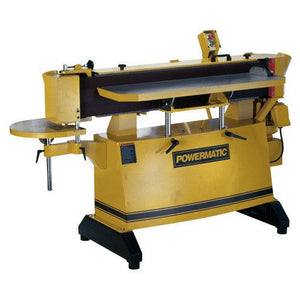
| OES9138 Oscillating Edge Sander | Powermatic | 3HP 1PH 230V | Single-phase shops requiring edge and fine finishing work | Contact for pricing |
| PM1-263 9" x 138" Oscillating Edge Sander | Powermatic | 3 HP, 230V 1Ph (OES9138B) | Professional finish work and custom cabinetry production | Contact for pricing |
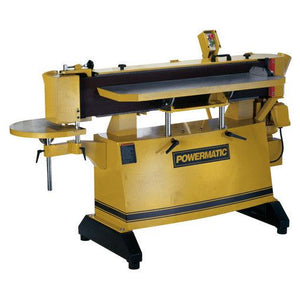
| OES9138 Oscillating Edge Sander | Powermatic | 3HP 3PH 230/460V | High-production environments with three-phase power availability | Contact for pricing |
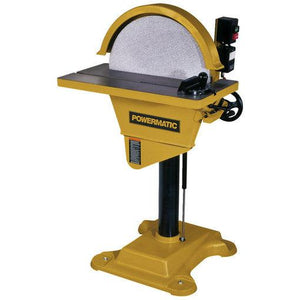
| DS-20 Disc Sander | Powermatic | 3HP 3PH 230/460V | Aggressive stock removal and flatting operations in production shops | Contact for pricing |
| DS-20 Disc Sander | Powermatic | 2HP 1PH 230V | Single-phase facilities needing disc sanding capability | Contact for pricing |
Frequently Asked Questions
What is the difference between oscillating edge sanders and disc sanders?
Oscillating edge sanders use a reciprocating belt motion combined with oscillation to produce exceptionally smooth, fine finishes with minimal scratch patterns—making them ideal for final finishing work and achieving superior surface quality. Disc sanders use a rotating disc to rapidly remove material and are better suited for aggressive stock removal, leveling, and flattening operations. Oscillating sanders excel at producing furniture-quality finishes, while disc sanders prioritize speed and material removal rate. Many professional shops use both types to handle different stages of their production workflow.
Should I choose single-phase or three-phase power?
Single-phase (1PH) motors work with standard residential and light commercial electrical service, making them ideal if your shop is on standard utility power without dedicated three-phase circuits. Three-phase (3PH) motors deliver superior performance, smoother operation, higher torque, and better efficiency, but require three-phase electrical service common in industrial facilities. If your facility already has three-phase power available, three-phase machines offer better performance and longevity. If you're operating in a small shop or standard commercial space with only single-phase service, single-phase Powermatic sanders deliver excellent performance without requiring electrical infrastructure upgrades.
What horsepower do I need for different woodworking applications?
For general finishing work with softwoods and moderately hard woods, 2HP is typically sufficient for small to medium production volumes. For professional production environments, harder wood species, or high-volume operations, 3HP and higher provides superior performance and prevents motor strain during extended use. Larger horsepower allows the sander to maintain consistent speed under load, produces better surface quality, and extends machine lifespan by reducing motor stress. Consider your material hardness, production intensity, and daily operating hours when selecting power—investing in adequate horsepower improves results and equipment longevity.
Do Powermatic sanders require dust collection, and what should I know about setup?
Yes, proper dust collection is essential for Powermatic sanders for both safety and air quality reasons. Woodworking sanders generate significant fine dust that poses respiratory hazards and can reduce visibility and equipment performance. Powermatic sanders are designed to integrate with industrial dust collection systems, and proper ductwork sizing and air volume are critical for effective dust capture. We recommend consulting dust collection specifications in your machine manual and ensuring your system delivers adequate CFM (cubic feet per minute) for optimal performance. Inadequate dust collection reduces sanding efficiency, increases maintenance requirements, and creates workplace safety issues. Pittsburgh Spray Equipment also stocks Powermatic dust collectors specifically engineered to pair with these sanders.
What voltage options are available and how do I know which to choose?
Powermatic sanders are available in 230V single-phase, 230V three-phase, and 230/460V three-phase configurations. Your choice depends entirely on your facility's electrical service. Most single-phase applications use 230V, which is standard in small shops and many commercial facilities. Three-phase machines come in 230V or 230/460V configurations—check your electrical service documentation or consult an electrician to determine your facility's available voltage. Ordering the wrong voltage will result in equipment that cannot operate, so verify your power specifications before purchasing. Pittsburgh Spray Equipment's sales team can help confirm the correct voltage for your application if you're uncertain about your electrical setup.
-
Powermatic - OES9138 Oscillating Edge Sander, 3HP 1PH 230V

- Regular price
-
$6,599.99
See Lower Price in Cart
-
Powermatic PM1-263 9" x 138" Oscillating Edge Sander, 3 HP, 230V 1Ph (OES9138B)


- Regular price
- $7,974.00
- Sale price
- $7,974.00
-
Powermatic - OES9138 Oscillating Edge Sander, 3HP 3PH 230/460V

- Regular price
-
$6,599.99
See Lower Price in Cart
-
Powermatic - DS-20, 20" Disc Sander, 3HP 3PH 230/460V

- Regular price
-
$3,959.00
See Lower Price in Cart


